How Long Does Vacuum-Sealed Food Last?
Vacuum sealing removes the oxygen that spoils food, but how much extra time you actually get depends on the food type and where you store it.
Vacuum sealing works by pulling air out of the bag and creating an airtight seal, which slows the growth of bacteria and mold and prevents freezer burn. The result is food that stays fresh noticeably longer than it would in a zip-top bag or plastic wrap. That said, vacuum sealing is not a substitute for refrigeration or freezing. It extends the clock, it does not stop it.
Products mentioned in this post


Vacuum-Sealed Meat in the Freezer
Raw beef, pork, and lamb stored in a standard freezer bag typically hold quality for 6 months before freezer burn sets in. Vacuum-sealed, that same meat can hold quality for 2 to 3 years at 0 degrees Fahrenheit. Poultry follows a similar pattern, going from about 9 months unsealed to 2 to 3 years vacuum-sealed. Fish and seafood, which degrade faster, go from roughly 3 to 6 months to about 2 years when properly vacuum-sealed and frozen. These are quality estimates, not safety cutoffs. Frozen food sealed airtight is safe indefinitely as long as it stays frozen, but texture and flavor do decline over time.
Vacuum-Sealed Meat in the Refrigerator
In the fridge, raw ground beef normally lasts 1 to 2 days. Vacuum-sealed, it extends to roughly 5 to 7 days. Whole cuts like steaks and roasts go from 3 to 5 days unsealed to about 2 weeks vacuum-sealed. Cooked meat follows a similar pattern, going from 3 to 4 days to roughly 7 to 10 days. One important note: some harmful bacteria, including certain strains that cause foodborne illness, can thrive without oxygen. For this reason, the USDA recommends following standard safe handling guidelines even with vacuum-sealed refrigerated meat, and not pushing the limits past the windows above.
Fruits, Vegetables, and Cheese
Whole hard vegetables like carrots and broccoli typically last 1 to 2 weeks in the fridge unsealed. Vacuum-sealed, they can reach 2 to 4 weeks. Soft berries and cut fruit are more fragile and gain less benefit, going from a few days to roughly a week. Hard cheeses do especially well under vacuum sealing. A block of cheddar that would last 1 to 2 weeks once opened can last 4 to 8 months vacuum-sealed in the fridge. Soft cheeses gain much less time and are better consumed fresh. Blanching vegetables before sealing and freezing them helps preserve texture and color over long storage.
Dry Goods, Coffee, and Pantry Items
Dry goods like flour, rice, nuts, and coffee beans are where vacuum sealing really shines for pantry storage. Nuts, for example, can go rancid in 3 to 6 months stored in a bag or canister exposed to air. Vacuum-sealed, they hold flavor for 1 to 2 years. Whole coffee beans kept in a bag lose peak flavor within a couple of weeks of roasting. Sealed airtight and stored at room temperature, the freshness window extends to several months. Flour and sugar stored in vacuum-sealed containers resist moisture and pests much better than those in standard bags. Pasta and dried beans gain similar long-term stability.
What Affects Shelf Life
Starting quality matters most. Vacuum sealing extends the freshness window you already have, so sealing old or borderline food gives you old food in an airtight bag, nothing more. Temperature is the second major factor. A vacuum-sealed steak kept at 40 degrees Fahrenheit will last roughly twice as long as one stored at 45 degrees. Machine quality also plays a role. An external sealer like the Nesco VS-12, which carries over 14,800 reviews and a 4.4-star rating, works well for bags and rolls. A chamber-style machine pulls a deeper vacuum, which is better for denser cuts and bulk sealing sessions. The seal itself has to be intact. A weak or wrinkled seal that allows air to re-enter defeats the purpose entirely.
Common Mistakes That Shorten Shelf Life
Leaving too little headspace between the food and the sealing edge is a frequent problem. The machine needs a clean, flat surface to form a proper seal, and any food residue on the bag opening will cause leaks. Sealing hot food is another mistake. Let cooked food cool completely before sealing, because heat creates steam inside the bag that compromises the seal and adds moisture. For liquids and very moist foods, pre-freezing before sealing prevents the vacuum pump from sucking liquid into the machine. Finally, not double-sealing bags for long freezer storage is worth fixing. Running the sealer twice on the same edge adds a second line of protection.
Is a Vacuum Sealer Worth the Cost for Food Storage?
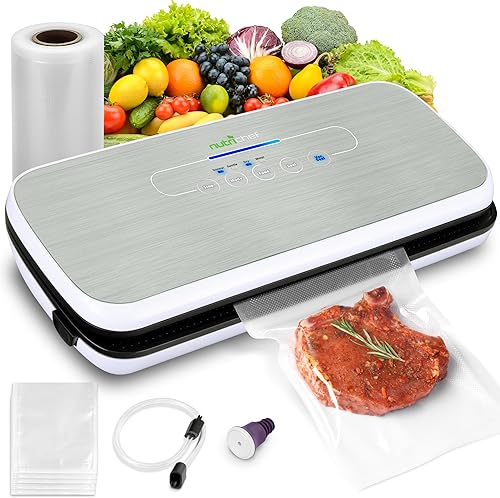
A basic external vacuum sealer runs anywhere from about $28 to $150 for home use. The NutriChef PKVS18SL comes in around $50 with a 4.3-star rating across more than 21,000 reviews, which reflects the volume of everyday home users who find it capable. If you buy meat in bulk, hunt or fish, or regularly throw away produce, a vacuum sealer typically pays for itself quickly through reduced food waste. Bags are an ongoing cost, usually a few cents to twenty cents each depending on size and brand. For high-volume use, a machine that takes rolls rather than only pre-cut bags gives you more flexibility on portion sizes.
Frequently asked questions
Does vacuum-sealed food last forever in the freezer?
No. Frozen food sealed airtight is safe indefinitely as long as it stays at 0 degrees Fahrenheit, but quality declines over time. Most vacuum-sealed frozen meat holds best flavor and texture within 2 to 3 years. After that it is still safe but may taste flat or have a slightly off texture.
Can vacuum sealing replace refrigeration?
No. Vacuum sealing slows spoilage by removing oxygen, but many bacteria and pathogens can still grow in low-oxygen environments. Perishable foods must still be refrigerated or frozen. Vacuum sealing extends how long food stays fresh within those temperature-controlled environments, it does not make food shelf-stable on its own.
How do I know if vacuum-sealed food has gone bad?
Check the seal first. If the bag has inflated or lost its tight shape, air has gotten in and the food may have spoiled. Beyond that, use the same indicators you would with any food: off smells, unusual color, or sliminess on meat are all signs to discard it regardless of how it was stored.
Does vacuum sealing work for liquids and soups?
Most external or edge sealers struggle with liquids because the vacuum pump can pull liquid toward the seal before the bag closes. The common workaround is to freeze soups or sauces in a shallow container first, then vacuum-seal the frozen block. Chamber vacuum sealers handle liquids much more reliably because the pressure change happens inside the chamber, not through a tube.
What foods should not be vacuum-sealed?
Soft cheeses, mushrooms, and garlic in oil should not be vacuum-sealed for extended refrigerated storage because they can harbor anaerobic bacteria in low-oxygen conditions. Whole raw apples and other produce that off-gas naturally can also cause bags to inflate. Cruciferous vegetables like broccoli and cabbage should be blanched and frozen before vacuum sealing rather than sealed raw for long-term storage.