How Much Water Does a Dishwasher Use?
Water use varies more than most people expect, and knowing the numbers helps you pick the right machine and run it the right way.
A standard full-size built-in dishwasher uses roughly 3 to 6 gallons of water per cycle, depending on the model, the cycle selected, and how well the machine has been maintained. That compares favorably to hand-washing, which can burn through 20 gallons or more if the tap stays running. The gap between an efficient model and an older or poorly spec'd one can add up to thousands of gallons a year, so water use is worth looking at before you buy.
Products mentioned in this post


The Average Numbers by Cycle Type
Normal cycles on most current built-in dishwashers land between 3 and 5 gallons. Heavy or pots-and-pans cycles can push that closer to 6 or 7 gallons because the machine runs additional fill and rinse stages. Quick or express cycles are often more water-efficient on a per-cycle basis, sometimes dropping below 3 gallons, but they rely on hotter water temperatures to compensate for shorter wash times. Eco or energy-saver cycles stretch the cycle time to heat water more slowly, which cuts electricity use but water consumption stays in the 3 to 4 gallon range. Rinse-only cycles typically use just 1 to 2 gallons and are useful for holding dishes overnight without a full wash.
How Dishwasher Age Changes the Equation
Machines made before 1994 routinely used 10 to 15 gallons per cycle because older spray arm designs needed more water volume to reach every surface. Models from the early 2000s improved to around 6 to 8 gallons. Current ENERGY STAR certified dishwashers must use no more than 3.5 gallons per cycle to earn the label, which is a meaningful threshold worth checking on a spec sheet. If you are replacing a machine that is 10 or more years old, a current model will almost certainly cut your dishwasher water bill significantly. The water savings alone can offset part of the purchase cost over time, particularly in areas with high water rates.
What Affects Water Use Beyond the Cycle Setting
Load size matters more than most people realize. Running a half-empty dishwasher uses nearly the same water as a full load because the machine fills to the same level regardless of how many dishes are inside. Soil sensors on mid-range and higher-end machines detect how dirty the water is and adjust run time and water use automatically, so a lightly soiled load may use less water than the published average. Hard water can also inflate effective water use, since mineral buildup reduces spray arm efficiency over time and owners compensate by running longer or hotter cycles. Keeping the filter clean is the simplest maintenance step to preserve a machine's designed water efficiency.
Built-In vs. Hand-Washing: The Real Comparison
Hand-washing dishes under a running tap uses roughly 2 gallons per minute, so a 10-minute session for a family's dinner dishes draws about 20 gallons. Even a less efficient built-in using 6 gallons per cycle cuts that by two-thirds. Filling a basin and not running the tap continuously brings hand-washing down to around 8 to 10 gallons, which is still higher than a modern dishwasher on a normal cycle. The comparison holds up even when you factor in pre-rinsing, which current dishwashers do not require if the machine has a decent sensor cycle. Scraping food off plates is enough; pre-rinsing under a running tap erases much of the water savings the dishwasher provides.
What to Look for When Shopping
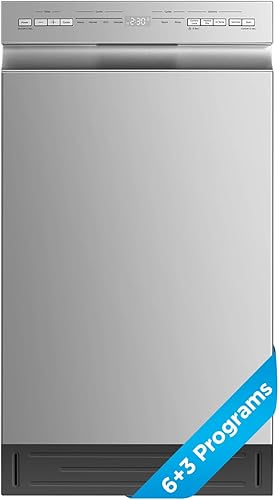
ENERGY STAR certification is the clearest signal that a machine meets the 3.5 gallon per cycle threshold. Beyond that label, look for a model with a soil sensor, which adjusts water use to actual load conditions rather than running a fixed program every time. The Midea MDF18A1AST, priced around $499, carries a 4.2-star rating across over 500 reviews and fits an 18-inch footprint with 8 place settings, making it a practical choice for smaller households that want a built-in without the footprint of a full 24-inch unit. For a larger household, the Honeywell HDS24SS-H at around $400 holds 12 place settings and runs at 42 dB with push-button controls, drawing over 300 reviews at 3.8 stars. Checking the actual gallon-per-cycle figure in the product specs or the EnergyGuide label is more reliable than assuming any new machine is automatically efficient.
Tips to Cut Water Use Without Buying a New Machine
Always run the dishwasher with a full load. Choosing the eco or normal cycle over heavy unless dishes are genuinely heavily soiled saves water on every run. Cleaning the filter monthly prevents the machine from working harder than it needs to, which indirectly preserves efficiency. Skipping the heated dry option saves electricity but does not affect water use. If the machine has a delay-start feature, running it during off-peak hours has no effect on water consumption but can lower electricity costs in areas with time-of-use utility rates. For households in drought-prone regions, even switching from a 10-year-old machine to a current ENERGY STAR model can save over 1,000 gallons per year.
Frequently asked questions
Is it really more water-efficient to use a dishwasher than to wash by hand?
Yes, for most households. A running kitchen tap flows at about 2 gallons per minute, so even a short hand-washing session can exceed what a full cycle uses. A current efficient dishwasher typically uses 3 to 5 gallons per cycle. The key is to skip pre-rinsing under a running tap, which cancels out much of the savings.
What does the ENERGY STAR label actually mean for water use?
ENERGY STAR sets a maximum of 3.5 gallons per cycle for dishwashers to earn the certification. It also sets an annual energy use limit. A machine displaying this label has been independently verified against both standards, so it is a reliable shortcut when comparing models without digging into every spec sheet.
Does the size of the load change how much water the dishwasher uses?
Mostly no. The machine fills to a set level based on the cycle selected, not the number of dishes inside. Some models with soil sensors will reduce water if the load is light and the water stays clean, but a half-empty load on a standard machine uses nearly the same water as a full one. This is why running full loads is the most practical way to lower per-dish water consumption.
Do quick or express cycles save water?
They often use slightly less water per cycle than a normal cycle, but they compensate with higher water temperatures to clean effectively in less time. The energy used to heat that water may offset any water savings on your utility bill. Quick cycles are best suited for lightly soiled loads, not the greasy pots a heavy cycle is designed for.
How often should I clean the dishwasher filter to keep it running efficiently?
Most manufacturers recommend checking and rinsing the filter once a month under running water. A clogged filter forces the spray arms to work harder and can leave food particles recirculating through the machine, which may prompt users to run a second cycle. Keeping it clean is the easiest free maintenance step to protect both cleaning performance and water efficiency.