How to Open Wine Without a Corkscrew
Six tried-and-true methods for getting into a wine bottle when you have no corkscrew handy, plus tips to avoid common mistakes.
You set out the glasses, picked the right bottle, and then realized the corkscrew is nowhere in sight. It happens to almost everyone at some point. The good news is that a standard cork can be coaxed out with tools most people already have around the house. Some methods take a little patience, and a couple carry a small risk of spilling or pushing the cork in, so knowing the tradeoffs before you start saves a lot of frustration. This guide walks through six workable approaches ranked roughly from safest to most creative, so you can pick the one that fits what you have on hand.
Products mentioned in this post


Method 1: Push the Cork In With a Blunt Tool
This is the fastest option and the one least likely to end in broken glass or spilled wine. Grab a thick marker, the handle end of a wooden spoon, or any smooth cylindrical object that fits inside the bottle opening. Press the cork firmly downward with steady pressure until it drops into the bottle.
The wine is still perfectly drinkable. The only real downside is that you cannot reseal the bottle, so plan to finish it or pour the remainder into a different container with a lid. Watch out for carbonation buildup if you are opening sparkling wine this way, since pushing the cork in can cause the wine to foam up fast. For still wine, it is straightforward and low risk.
Method 2: Use a Screw, a Screwdriver, and Pliers
This is the closest DIY substitute for an actual corkscrew, and it works surprisingly well. You need a long screw (at least 2 inches), a screwdriver, and a pair of pliers or a fork to pull with.
Drive the screw into the center of the cork, leaving about half an inch of the screw head sticking out above the cork surface. Then grip the screw head with the pliers and pull straight up while holding the bottle steady with your other hand. Go slow and keep the pull as vertical as possible so the cork does not tear. A fatter screw with wider threads grips the cork better than a thin drywall screw.
Method 3: The Shoe Method
This one looks odd but works on the same physics as a pump: repeated compression forces the cork gradually upward. Place the bottom of the wine bottle inside a shoe, ideally one with a thick rubber sole that cushions the glass. Hold the shoe with the bottle in it and tap the heel firmly against a wall or solid surface. Use controlled, moderate strikes rather than hard swings.
After 10 to 20 taps, check the cork. It should have moved outward by a few millimeters. Continue until enough of the cork protrudes that you can grip it and twist it out by hand. Stop before the cork fully exits on its own or wine will spray. This method requires patience and works best with corks that are already slightly loose. Avoid it with older bottles where the glass may be thinner.
Method 4: Use a Bike Pump or Needle Inflator
If you have a bicycle pump with a needle attachment (the kind used for inflating sports balls), you can use air pressure to pop the cork. Push the needle through the center of the cork all the way into the air gap between the cork and the wine. Then pump slowly, one pump at a time.
The air pressure builds under the cork and pushes it upward. Stop as soon as the cork starts to move and let it ease out gradually. Do not pump aggressively. Rapid pressure buildup in a sealed glass bottle can cause the bottle to crack, which is a real safety concern. One or two pumps at a time with a pause in between is the right pace.
Method 5: Use a Key or Serrated Knife
Insert a house key or a serrated knife blade into the cork at a 45-degree angle, pushing it in about an inch deep. Then rotate the key or knife in a circular motion while gently pulling upward. The goal is to work the cork loose by turning it rather than pulling it straight out.
This takes more effort than it sounds and there is a real risk of the cork crumbling into the bottle if you push too deep or twist too forcefully. Go slowly and be ready to switch to the push-it-in method if the cork starts to break apart. A serrated blade grips the cork better than a smooth key, so that is the better tool if you have it.
Method 6: Wire Coat Hanger Hook
Unwind a wire coat hanger and bend the end into a small hook, similar to a crochet needle shape. Push the wire down the side of the cork, between the cork and the bottle neck, until the hook is below the bottom edge of the cork. Rotate the wire 90 degrees so the hook catches the underside of the cork, then pull straight up.
This approach takes a steady hand and some fiddling to get the hook seated properly, but it does not damage the cork at all, which means you can still reseal the bottle afterward. The main challenge is getting the wire down alongside the cork without too much force, since some corks fit very tightly in the neck.
When to Skip the Workarounds and Invest in a Good Opener
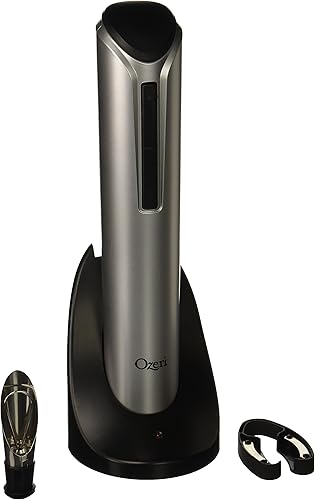
If this situation comes up more than once a year, a dedicated wine opener is worth having. Electric wine openers in particular remove virtually all the effort: you place the device on the bottle neck, press a button, and the cork is out in a few seconds. Models like the Secura electric opener have earned over 37,000 ratings on Amazon and cost around $23, which is a small one-time cost compared to wrestling with a screw and pliers every time.
For occasional use, a waiter-style lever corkscrew is compact enough to toss in a drawer or a bag and costs under $15. The workarounds in this guide are genuinely useful in a pinch, but they are not something most people want to repeat regularly.
Frequently asked questions
Is wine still safe to drink after pushing the cork inside the bottle?
Yes. A cork that falls into the wine does not contaminate it. The wine may pick up a faint cork taste if the cork sits submerged for a long time, but for a bottle you plan to finish that evening it makes no practical difference. Just pour carefully to avoid cork pieces in the glass.
What is the easiest no-tool method?
Pushing the cork in with the handle of a wooden spoon or a thick marker is the easiest approach since it requires no special tools and takes less than a minute. The tradeoff is that the bottle cannot be resealed.
Can I open a sparkling wine or Champagne bottle without a corkscrew?
Sparkling wine has a mushroom-style cork held in place by a wire cage, so you do not need a corkscrew at all. Untwist the wire cage, hold the cork firmly, and rotate the bottle (not the cork) slowly while angling it away from people. The pressure does most of the work. Never use the shoe or air-pump methods on sparkling wine.
Why does the shoe-tapping method work?
Each tap creates a small hydraulic shock that transmits through the wine and pushes against the bottom of the cork. Because wine is nearly incompressible, the force has nowhere to go but outward, and the path of least resistance is upward through the cork. The effect is small with each tap, so it takes repeated strikes to move the cork far enough to grip it.
How do I avoid getting cork pieces in the wine?
Work slowly with any method that grips or twists the cork. If the cork starts to crumble, switch to pushing it fully into the bottle rather than continuing to pull. Then pour the wine through a fine-mesh strainer or a piece of cheesecloth to catch any fragments before serving.