Why Is My Dishwasher Not Drying Dishes?
Wet dishes at the end of a cycle are almost always caused by one of a handful of fixable problems, not a broken machine.
You open the dishwasher door expecting dry plates and find everything dripping. It is one of the most common complaints about built-in dishwashers, and the good news is that the cause is usually something you can correct yourself in a few minutes. The fix depends on which part of the drying process is failing, so it helps to understand how your machine actually dries dishes in the first place. Most dishwashers rely on a combination of hot rinse water, residual heat, and rinse aid to pull moisture off surfaces before the cycle ends.
Products mentioned in this post

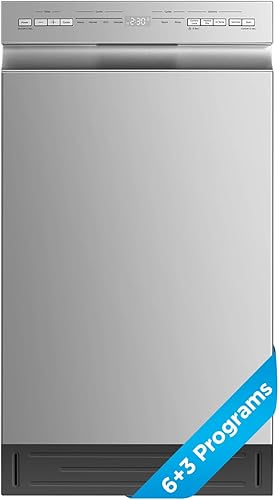

How Dishwasher Drying Actually Works
Built-in dishwashers use one of two main drying methods. Heated dry uses an electric coil inside the tub to raise the air temperature so water evaporates off dishes. Condensation drying, which is common on stainless steel tub models, skips the coil entirely and relies on the hot water from the final rinse transferring heat to dishes so moisture condenses on the cooler stainless walls and drains away. Neither method works perfectly without rinse aid, and condensation drying in particular leaves plastic items wet almost every time because plastic does not hold heat the way glass and ceramic do. Knowing which type you have tells you which fixes to try first.
Empty or Skipped Rinse Aid Is the Number One Culprit
Rinse aid is not optional. It breaks the surface tension of water so it sheets off dishes instead of beading and pooling. Without it, even a dishwasher with a working heating element leaves spots and wet patches, especially on glasses. Check the rinse aid dispenser on the inside of the door. Most dispensers have a small window or indicator that shows the level. Refill it with any standard rinse aid, then run a cycle and see if drying improves before assuming something is mechanically wrong. If your model has an adjustable rinse aid setting, try increasing it one step at a time.
Selecting the Wrong Cycle or Drying Setting
Many dishwashers default to an eco or energy-saving cycle that lowers the wash temperature and skips or shortens the heated dry phase to reduce electricity use. That tradeoff means wetter dishes. Check your control panel for a heated dry, extra dry, or boost dry option and make sure it is turned on. Some models, like those with push button controls, require you to select the drying option separately each time you start a cycle. If you have been running quick wash cycles, switch to a normal or heavy cycle for at least one test run since those cycles use hotter water in the final rinse, which is what makes condensation drying work.
Loading Patterns That Trap Water
The way dishes are loaded has a real effect on drying results. Cups, bowls, and deep containers placed right-side up collect standing water in their base that never evaporates. Angle everything so water can run off rather than pool. Overcrowding the racks blocks airflow and prevents heat from circulating evenly around every item. Plastic containers and lids are especially prone to staying wet because their low thermal mass means they cool off before moisture can evaporate. Placing plastics on the top rack, away from the heating element if your machine has one, helps somewhat, but some residual moisture on plastics is normal regardless of what dishwasher you own.
A Faulty Heating Element or Thermostat
If rinse aid is full, the heated dry setting is on, and dishes still come out wet, the heating element may have failed. On models that use heated dry, the element sits along the bottom of the tub and should feel warm to the touch right after a cycle ends. A multimeter can confirm whether the element has continuity. A broken thermostat can also prevent the machine from reaching the water temperature needed for condensation drying to work. Both parts are serviceable on most brands, but replacement cost varies. For a machine priced around $400 to $500, getting a repair quote first makes sense before committing to parts.
The Door Latch and Ventilation
Some dishwashers release the door slightly at the end of the cycle to let steam escape, which speeds drying considerably. If the door does not open automatically on your model, you can crack it open yourself about an inch after the cycle finishes and leave it for 15 to 20 minutes. The rush of cooler air from the kitchen pulls moisture out of the tub quickly. If your model is supposed to auto-release but the door stays sealed, the latch mechanism may need adjustment. Check your owner manual for whether your specific model includes an auto-open feature before assuming it is broken.
When to Consider a Machine With Better Drying Performance
Some dishwashers simply dry better than others due to design, not just settings. Models with lower noise ratings, like units rated at 42 dB to 45 dB, tend to have thicker insulation and better-engineered tubs that support more effective condensation drying. The Honeywell HDS24SS-H, rated at 42 dB and priced at $399.99, has collected over 327 reviews with a 3.8-star average, giving a reasonable picture of real-world performance at that price point. The Midea MDF18A1AST at $499.12 has 501 reviews at 4.2 stars and runs at 52 dB, which puts it in the mid-range for both noise and drying efficiency. If your current machine is older and drying problems are getting worse despite proper rinse aid use and correct settings, it may be at the end of its useful life rather than in need of a single fix.
Frequently asked questions
Why are my dishes still wet even with heated dry turned on?
The most common reason is an empty rinse aid dispenser. Heated dry works by evaporating water, but without rinse aid to help water sheet off surfaces, it pools and stays wet. Refill the dispenser first. If that does not help, check that the heating element has not failed by feeling whether the inside of the tub is warm right after a cycle ends.
Is it normal for plastic dishes to stay wet?
Yes, this is normal on almost every dishwasher. Plastic has very low thermal mass, meaning it cools down quickly during the cycle and does not retain enough heat to evaporate water the way glass or ceramic does. Placing plastics on the top rack and cracking the door open after the cycle reduces the problem but rarely eliminates it completely.
How much rinse aid should I be using?
Most dispensers hold enough rinse aid for 20 to 40 cycles, and many machines have an adjustable dosage setting, typically numbered 1 to 6. Start at the middle setting and increase by one step if dishes still come out wet. You can usually see the rinse aid level through a small window on the dispenser cap.
Does opening the dishwasher door after a cycle really help drying?
It helps significantly. Opening the door one to two inches immediately after the cycle finishes allows steam to escape and brings in cooler, drier air from the kitchen, which draws residual moisture out of the tub. Many newer dishwasher models do this automatically with an auto-release door latch.
Could the problem be with my water temperature?
Yes. Dishwashers need incoming water at around 120 degrees Fahrenheit to clean and dry properly. If your water heater is set lower than that, the machine may not reach the temperature needed for condensation drying to work. Run the hot water at your kitchen sink for 30 seconds before starting the dishwasher so the supply line is already warm when the cycle begins.