Chamber vs External Vacuum Sealer: Which One Do You Actually Need?
Recommended picks


How Each Type Works
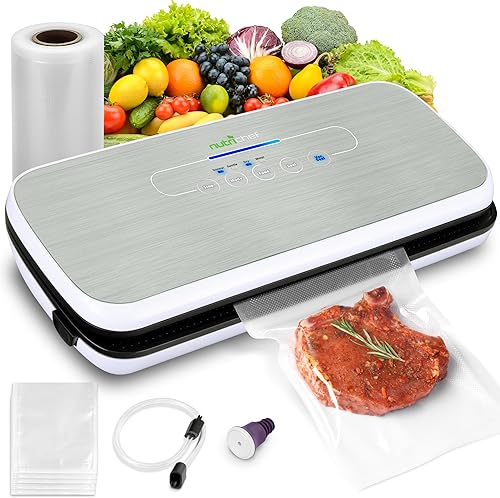
An external sealer has a suction port on its lid that grips the open end of a textured bag. The pump draws air out through that opening and then heat-seals the bag closed. The whole process takes about 20 to 30 seconds per bag. A chamber sealer works differently: you place the entire bag inside a lidded chamber, the pump evacuates air from the whole chamber, and then the machine seals and re-pressurizes before you open the lid. Because the bag and the surrounding space lose pressure at the same rate, liquids inside the bag stay put instead of getting sucked out.
Cost and Size Differences
External sealers are the clear budget choice. The NutriChef PKVS18SL, rated 4.3 stars across more than 21,100 reviews, runs about $50 and weighs just under 3 lb at 14.1 x 6.0 x 3.0 in, which means it fits in a drawer. The Nesco VS-12, rated 4.4 stars from 14,800 reviewers and priced around $134, draws 130W and weighs 6 lb, sitting toward the upper end of what most external sealers cost. Chamber sealers occupy a different price tier. The Avid Armor USV20, rated 4.7 stars by over 1,100 buyers and priced at $319, pulls 300W and weighs 17.3 lb, and that is a relatively compact chamber model. Commercial chamber units can exceed $900 and top 80 lb, so they are typically a permanent countertop fixture.
Bag Costs and Compatibility
External sealers require textured or embossed bags, since the channels in the bag material are what allow air to be pulled out. These bags cost more per unit than smooth bags. Chamber sealers work with smooth bags, which are cheaper and often sold in large rolls, making per-seal cost noticeably lower over time. If you seal large volumes, the bag savings alone can begin to offset a chamber sealer's higher purchase price. External sealers from different brands often use proprietary accessories, so check compatibility before buying replacement rolls.
What Each Type Handles Well
External sealers are solid for dry goods: fish fillets, chicken breasts, cheese blocks, vegetables, and pantry staples like coffee and nuts. They struggle with wet or liquid-heavy items because the suction pulls liquid toward the seal bar before the bag closes, which can cause a weak or failed seal. Chamber sealers handle soups, brines, marinated meats, and sauces without any liquid management tricks. They are also the preferred tool for sous vide cooking, since you can seal a protein in a marinade without losing any of it. For hunters or anyone processing whole animals, the ability to seal wet, freshly cut meat cleanly is a major practical advantage.
Durability and Duty Cycle
Most external sealers are built for light to moderate home use. Sealing several bags in a row can cause the machine to warm up, and many models recommend a rest period between cycles to protect the motor and seal bar. Chamber sealers are built to a heavier-duty standard because they are commonly used in commercial and semi-commercial settings. The stainless steel construction on models like the Avid Armor USV20 is designed to stand up to daily, high-volume sealing. If you process a deer or a half-steer in one weekend, a chamber sealer handles that workload more reliably than an entry-level external unit.
Which One Should You Buy
Choose an external sealer if you want something affordable, portable, and quick for routine dry-food storage. A model in the $50 to $135 range covers most home needs and stores easily. Choose a chamber sealer if you seal liquids or marinades, do sous vide cooking, process large quantities of fresh meat, or want to keep per-bag costs low over years of use. The higher upfront cost and larger footprint are real tradeoffs, but for the right user they pay off quickly. If you are undecided, consider how often you seal wet foods: once a month or less, an external sealer is probably fine; weekly or more, a chamber sealer removes enough friction to justify the investment.
Common mistakes to avoid
- Trying to seal liquid-heavy foods with an external sealer without leaving extra headspace, which pulls liquid into the seal bar and creates a weak seal.
- Buying a chamber sealer expecting it to be as compact as an external model. Most chamber units weigh 15 lb or more and need a dedicated countertop spot.
- Using smooth bags with an external sealer. Smooth bags have no channels for airflow, so the machine cannot evacuate the bag properly.
- Running an external sealer through many consecutive seals without a rest period, which can overheat the seal bar and shorten the machine's life.
- Assuming all external sealers accept the same bag rolls. Many brands use proprietary sizing or texturing, so check compatibility before buying in bulk.
- Buying a chamber sealer rated in the hundreds of watts for a kitchen with limited circuit capacity, without verifying that the outlet can handle the load.
Frequently asked questions
Can I use an external vacuum sealer for soups or sauces?
You can try, but results are inconsistent. The suction pulls liquid toward the seal area before the bag closes, which often leads to a partial seal or a bag that fails in the freezer. The standard workaround is to freeze the liquid first until solid, then seal it. If you seal liquid foods often, a chamber sealer handles the task cleanly without any prep workaround.
Are chamber vacuum sealers worth the price for home use?
It depends on how you cook. If you do sous vide, process game or bulk meat, or want to seal anything wet, a chamber sealer earns its cost relatively quickly through cleaner results and cheaper bags. If you mainly seal dry pantry items a few times a week, a quality external sealer in the $100 to $150 range is genuinely sufficient and much easier to store.
Do chamber sealers work with regular vacuum sealer bags?
Chamber sealers use smooth, non-embossed bags, not the textured bags sold for external sealers. Smooth bags are less expensive and sold in bulk rolls, which lowers the per-seal cost over time. Using textured bags in a chamber machine is generally unnecessary and wastes money, since the texture serves no function in that design.
What wattage should I look for in a vacuum sealer?
External sealers typically draw 110 to 160W, which is well within normal household outlet limits. Chamber sealers pull considerably more power, with many models in the 300W range and commercial units reaching 900W to 1,020W. For home use, a chamber sealer in the 300W range is sufficient. Higher wattage generally means faster pump cycles and a heavier-duty motor, but for occasional home use the difference is modest.
Can I contact ShopperScout with questions about vacuum sealers?
Yes. You can reach the editorial team at hello@shopperscout.com. We are happy to answer questions about choosing between specific models or types based on how you plan to use them.