What Can You Vacuum Seal? A Practical Guide to Foods That Work (and a Few That Don't)
Recommended picks


Raw and Cooked Meats
Raw meat is the single most popular use for vacuum sealers, and for good reason. Removing air slows oxidation and freezer burn dramatically, stretching safe freezer life from roughly 6 months for a standard wrap to 2 to 3 years in a sealed bag. Whole cuts like chicken breasts, steaks, pork chops, and roasts seal cleanly because they are firm and dry on the surface. Ground meat works best when you portion it flat before sealing so bags stack easily. Cooked leftovers, from pot roast to grilled chicken, seal just as well once they have cooled completely. A machine with solid suction and a reliable heat strip, like the Nesco VS-12 (rated 4.4 stars across 14,800 reviews, around $134), handles everyday meat-sealing sessions without overheating between cycles.
Cheese, Dairy, and Deli Items
Hard and semi-hard cheeses such as cheddar, gouda, parmesan, and Swiss are excellent candidates because their low moisture content lets the bag seal cleanly. Vacuum sealing prevents the surface mold that forms on refrigerated cheese within a week or two, extending usable life by several weeks. Soft cheeses, including fresh mozzarella and ricotta, contain too much moisture for a standard bag seal but can be portioned into rigid canisters with a vacuum port. Sliced deli meats seal well in flat portions, though it helps to freeze them for 20 minutes first so slices don't compress into a solid block. Butter and hard cheeses can go straight from the fridge into the bag.
Vegetables and Fruits
Most vegetables vacuum seal best after blanching, which deactivates the enzymes that cause color loss and mushy texture in the freezer. Broccoli, green beans, corn, carrots, and peas all freeze well this way. Raw firm vegetables like bell peppers and onions can also be sealed for shorter-term refrigerator storage without blanching. Fruits with a firm structure, such as grapes, blueberries, sliced apples, and mango chunks, seal cleanly after a quick pre-freeze on a sheet tray. Soft fruits like strawberries and raspberries should also be frozen solid first or the vacuum pressure will crush them before the bag seals. High-liquid vegetables such as zucchini and cucumber are better suited to short refrigerator storage rather than long freezer runs.
Dry Goods, Coffee, and Pantry Staples
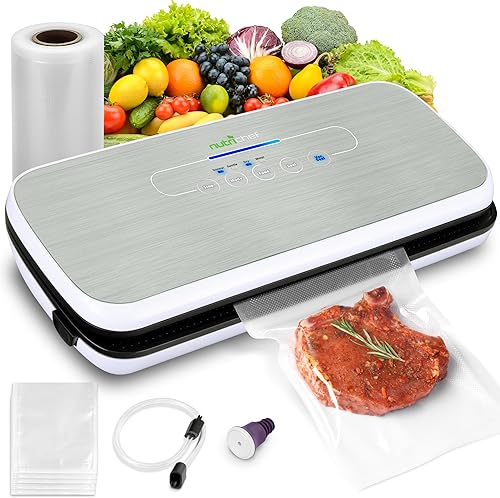
Dry storage is one of the easiest vacuum sealing applications. Rice, dried beans, lentils, flour, nuts, coffee beans, and dehydrated snacks all seal without any prep. Removing air keeps oils in nuts and coffee from going rancid, which is a real problem with standard pantry storage in warm kitchens. For items you access frequently, a canister with a vacuum port is more practical than bags, since you can reseal the canister each time. The NutriChef PKVS18SL (4.3 stars, over 21,100 reviews, around $50, 120W) is a compact option many shoppers use specifically for pantry sealing because it is lightweight at under 3 lb and fits easily in a drawer between uses.
Liquids, Soups, and Sauces
Liquid can be vacuum sealed in bags, but the machine will try to pull the liquid into the sealing channel if it isn't handled correctly. The most reliable method is to freeze the liquid first in a mold or zip bag until it is slushy or solid, then transfer it to a vacuum bag for a clean seal. Alternatively, use a chamber vacuum sealer, which equalizes pressure inside the whole chamber so liquid stays put. The Avid Armor USV20 is a chamber-style machine rated 4.7 stars across 1,100 reviews and priced around $319. Its 300W pump and stainless steel build handle liquid-heavy jobs that would defeat a standard edge sealer. Marinades work especially well in a chamber sealer because the vacuum actually draws the marinade into the meat much faster than soaking.
Foods That Need Special Handling or Should Be Skipped
A few foods are genuinely problematic. Whole raw mushrooms off-gas carbon dioxide and need to breathe, so sealing them in an airtight bag accelerates spoilage rather than slowing it. Raw garlic stored in oil at room temperature can create conditions favorable for harmful bacteria, so that combination should be refrigerated and used quickly, not sealed for long storage. Cruciferous vegetables like broccoli and cauliflower release gas if sealed raw without blanching, which will inflate the bag over time. Carbonated drinks cannot be vacuum sealed in standard bags. Very soft ripe produce, runny cheeses, and freshly baked bread with a soft crust can be crushed or deformed by the vacuum. For bread, a gentle or pulse vacuum setting on machines that offer it will seal without flattening the loaf.
Common mistakes to avoid
- Sealing liquids without pre-freezing them, which pulls liquid into the sealing strip and causes a weak or failed seal.
- Skipping blanching on vegetables before freezer storage, leading to mushy texture and color loss after a few weeks.
- Overfilling bags and leaving too little room at the open end, which prevents a full heat seal along the entire width.
- Sealing warm or hot food straight from the stove, which creates condensation inside the bag and can damage the machine's gasket.
- Storing vacuum-sealed garlic and oil at room temperature for extended periods, which creates a low-oxygen environment that can be unsafe.
- Using a generic zip bag instead of textured vacuum sealer bags, which do not allow the machine to draw air out properly.
Frequently asked questions
Can you vacuum seal fresh vegetables without blanching?
You can seal raw vegetables for short-term refrigerator storage, typically 1 to 2 weeks, without blanching. For freezer storage longer than a month, blanching is the right call because it deactivates enzymes that break down color and texture over time. Skip blanching and your green beans will come out mushy and gray after a few months, even in a well-sealed bag.
How long does vacuum-sealed meat last in the freezer?
Most raw cuts of beef, pork, and poultry last 2 to 3 years in the freezer when vacuum sealed, compared to roughly 6 months in a standard zipper bag or butcher wrap. Ground meat, which has more surface area exposed to oxygen, benefits the most from vacuum sealing. These are general guidelines based on food safety guidance and not guarantees for every storage situation.
Can you vacuum seal soup or broth?
Yes, but liquids need to be handled differently than solid foods. The safest method for a standard edge sealer is to freeze the soup or broth solid first, then place the frozen block into a vacuum bag and seal it. A chamber vacuum sealer is the more convenient option for liquids because the design prevents liquid from traveling toward the seal. Either way, leave enough headroom in the bag so the frozen block sits well below the seal line.
Is it safe to vacuum seal raw garlic?
Raw garlic by itself, sealed and kept frozen or in the refrigerator and used within a week or two, is generally fine. The concern is raw garlic stored in oil at room temperature in an oxygen-reduced environment, which can create conditions for harmful bacterial growth. If you vacuum seal garlic, keep it frozen or refrigerated and do not hold it at room temperature for extended periods.
Can you reuse vacuum sealer bags?
Bags that held dry goods or blanched vegetables can typically be washed and reused a few times as long as the original seal area is trimmed off and there is enough bag length remaining to create a fresh seal. Bags that held raw meat, fish, or marinades should not be reused because residue can harbor bacteria even after washing. Thicker bags designed for chamber sealers tend to hold up through more reuse cycles than thin edge-sealer bags.