How to Choose a Vacuum Sealer That Actually Fits Your Kitchen
Recommended picks
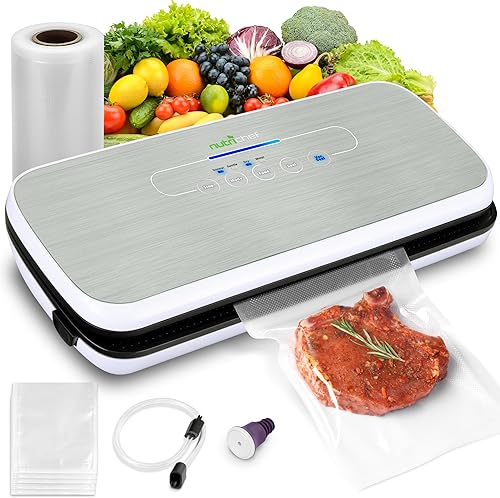


External Sealers vs. Chamber Sealers
External sealers clamp down on the open end of a bag and suck air out through the bag opening. They are compact, light (the NutriChef PKVS18SL is 2.94 lb and measures 14.1 x 6.0 x 3.0 in), and cost as little as $30 to $150. The tradeoff is that they struggle with wet or liquid-rich foods because the vacuum can pull liquid into the sealing strip before the bag closes. Chamber sealers enclose the entire bag inside a lid, evacuate all air from the chamber, then seal, which lets you package soups, brines, and juicy proteins without losing liquid. The Avid Armor USV20 is a compact chamber model at $319 with a 4.7-star average from 1,100 ratings and weighs 17.3 lb, which is on the lighter side for a chamber machine.
Wattage and Motor Strength
Wattage tells you how hard the pump works and how long it can run before needing a rest cycle. Entry-level external sealers like the NutriChef PKVS18SL run at 120W, which is enough for light to moderate use. Mid-range machines such as the Nesco VS-12 step up to 130W and are built for people who seal several batches in a row. Prosumer chamber machines often reach 300W or more, letting them run continuously without overheating. If you seal large game harvests or process protein in bulk, look for machines rated at 300W and above and pay attention to manufacturer duty-cycle guidance if it is listed.
Weight and Countertop Footprint
Weight matters more than most buyers expect. External sealers in the $30 to $150 range typically weigh 2 to 6 lb, so they are easy to pull out of a cabinet and put away after use. The Nesco VS-12, for example, weighs 6 lb and lists at $133.99, sitting comfortably in the mid-tier external category. Chamber sealers are heavier, usually 15 to 30 lb for countertop models, meaning most buyers leave them out permanently. Before buying a chamber sealer, measure your counter space against the machine dimensions and factor in clearance for the lid.
Bag Compatibility and Running Costs
Some vacuum sealers work only with the brand's own textured bags, while others accept any standard embossed bag roll. Proprietary bags cost more per foot and can be hard to find locally. When comparing machines, check whether the manufacturer requires its own bags or specifies a minimum bag thickness. Universal-compatible machines let you buy third-party rolls in bulk, which cuts long-term cost significantly if you seal frequently. Also look for a built-in roll cutter and bag storage compartment, which keep roll-cutting fast and avoid loose rolls cluttering the drawer.
Moist vs. Dry Sealing Modes
Better external sealers offer separate moist and dry modes. The dry mode uses a shorter vacuum cycle, leaving a bit of air to avoid crushing delicate items. The moist mode extends vacuum time and seals slightly faster to prevent moisture from reaching the heating strip. If you plan to seal fresh fish, marinated chicken, or cut fruit, having a dedicated moist mode is worth looking for. Budget machines under $40 often skip this feature, which is fine if you mainly seal dry goods like nuts, jerky, or grains.
When to Step Up to a Prosumer or Chamber Model
If you process an entire deer or elk each season, seal large batches of sous vide proteins weekly, or run a small food business, a prosumer chamber sealer pays for itself in reduced bag waste and faster throughput. The Avid Armor USV20 at $319 and 4.7 stars from over 1,000 buyers is a well-regarded entry point into countertop chamber sealers. Heavy commercial chamber units like the Vevor DZ-400-2E-V1 weigh 143 lb and exceed $800, so they belong in commercial kitchens, not home use. For most home buyers, the practical ceiling is a mid-size stainless chamber sealer in the $300 to $500 range.
Common mistakes to avoid
- Buying a cheap external sealer without checking whether it accepts universal bags, then discovering replacement bags are expensive or out of stock.
- Choosing a machine by price alone without considering wattage, which leads to overheating and premature motor failure if you seal in long batches.
- Using an external sealer on liquid-rich foods like soups or fresh marinades, which pulls liquid into the seal strip and causes leaks or weak seals.
- Ignoring machine weight when buying a chamber sealer and then finding there is no practical place to leave it on the counter.
- Skipping the moist mode feature and then getting poor seals on fresh proteins or produce.
- Assuming all vacuum sealer bags are interchangeable, when some machines require brand-specific textured rolls with a particular channel pattern.
Frequently asked questions
What is the difference between a chamber sealer and an external sealer?
An external sealer draws air out through the bag opening with a nozzle or clamp at the machine edge. A chamber sealer places the entire bag inside a lidded compartment and evacuates the whole chamber before sealing. Chamber sealers handle wet and liquid foods better and produce a more consistent vacuum, but they cost more and weigh far more than external models.
Can I vacuum seal liquids in an external sealer?
Not reliably. The suction on an external sealer pulls liquid toward the sealing strip before the bag closes, which weakens or ruins the seal. The common workaround is to freeze the liquid first into a solid block before sealing. For soups, stocks, or juicy marinades you want to seal at room temperature, a chamber sealer is the practical choice.
How long does food actually last in a vacuum-sealed bag?
Vacuum sealing significantly slows oxidation and freezer burn but does not sterilize food. Properly sealed fresh meat can last 2 to 3 years in the freezer versus 6 months unprotected. Dry goods like nuts or coffee stay fresh far longer in a sealed bag than in open containers. Refrigerator storage times also extend, though you still need to follow safe temperature and handling practices.
Do I need to buy brand-name bags, or will any bag work?
Most external sealers work with any embossed (textured) vacuum bag roll that matches the machine's maximum bag width. Some brands do recommend their own bags, but independent compatibility is common. Check the manual or the product listing for bag width limits. Buying third-party rolls in bulk can meaningfully reduce the per-seal cost over time.
Is a higher wattage vacuum sealer always better?
Higher wattage means a stronger pump and faster vacuum cycle, which matters most if you seal large batches without stopping. For occasional home use, a 110W to 130W machine is plenty. Where wattage starts to matter is continuous-use scenarios: processing game meat over several hours, running a chamber sealer all day, or sealing thick bags that need more suction to evacuate fully. For light weekly use, paying a premium for extra wattage offers little practical benefit.