How to Choose a Food Slicer
Recommended picks
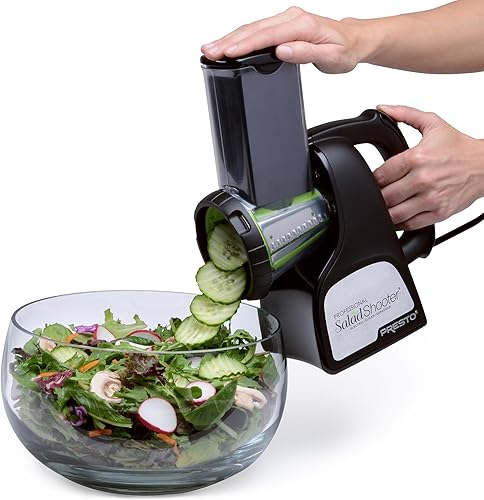

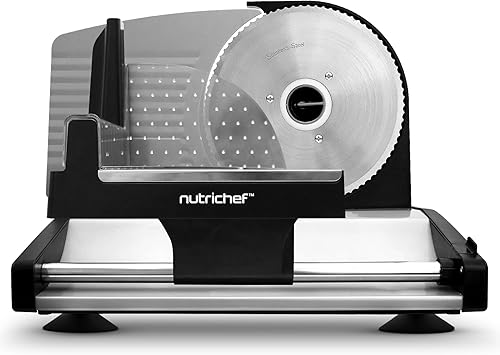
Blade Size: The Spec That Determines What You Can Slice
Blade diameter controls the maximum food diameter the slicer can handle in a single pass. Entry-level home slicers commonly carry 7-inch or 7.5-inch blades, which cover deli meats, cheeses, and most bread loaves without trouble. If you plan to slice whole bone-in cuts or large roasts, a 10-inch or larger blade gives you room to work without repositioning. The Presto 02970, priced at $72.44 with a 4.5-star rating across 9,100 reviews, is a compact, lightweight option (3.9 lb) suited to everyday deli-style slicing at home. For tougher jobs, the Cuisinart FS-75 at $119.00 (4.2 stars, 3,800 reviews) adds more heft at 11 lb, which translates to better stability when working through denser food.
Motor Power and Duty Cycle
Motor wattage tells you raw power, but the duty cycle tells you how long the machine can run before it needs to rest. Many budget slicers are rated for intermittent use, meaning you should stop and let the motor cool after a few minutes of continuous cutting. If you are slicing for a crowd or batch-prepping proteins for the week, look for a model described as continuous-duty or with a higher wattage rating. Commercial-grade machines like those from Vevor or LEM solve this problem but weigh 34 lb or more, which is a significant countertop commitment. For most home kitchens, a mid-range slicer with a 130W to 200W motor handles a reasonable session without trouble.
Weight and Countertop Stability
Lighter slicers are easier to store but can walk across the counter during use if suction feet are weak. The Hamilton Beach 70930 weighs just 4.4 lb and costs $57.45 (4.4 stars, 2,300 reviews), making it easy to pull out and put away, though you may need to hold it steady on smooth surfaces. The Cusimax CNFS-2201, at 10.8 lb and $129.42 (4.4 stars, 4,900 reviews), sits more firmly by sheer mass. Heavier semi-commercial machines above 30 lb rarely need to be anchored but are impractical to move around. Match weight to how often you plan to use the machine and how much dedicated storage space you have.
Slice Thickness Adjustment and Precision
A good slicer lets you dial thickness from paper-thin deli cuts (under 1 mm) up to 0.5-inch or thicker slabs for bread or roasts. Look for a thickness adjustment knob with a zero stop, which lets you return to the closed position without guessing. Cheaper models may have vague markings that drift over time. If you want consistent deli-thin slices for charcuterie or cured meats, check reviews specifically for thickness consistency rather than just average rating. The NutriChef NUGJ801 at $69.99 (4.3 stars, 765 reviews, around 200 units purchased last month) is a compact, actively selling option worth considering for occasional deli slicing at home.
Safety Features to Look For
Electric slicer blades are exposed and extremely sharp. A blade guard that covers the non-cutting portion of the blade is a basic requirement, not a luxury. The food carriage should have a hand guard that keeps fingers away from the blade path during the entire slicing stroke. A power switch that requires deliberate action (a recessed button or a two-step process) reduces the chance of accidental starts. Non-slip feet matter more on smooth granite or quartz countertops. If you have children in the house, choose a model with a locking mechanism that disables the machine when not in use.
Cleaning and Maintenance
No part of an electric slicer should go in the dishwasher unless the manual explicitly says so. Most removable parts, including the blade, food carriage, and thickness guide, are hand-wash only, and the blade itself must be handled with cut-resistant gloves or a folded towel. Slicers with fewer crevices and smooth internal surfaces clean faster. Stainless steel parts resist food staining and are easier to sanitize than plastic. Before buying, read a handful of reviews that specifically mention cleanup, as some models trap fat and debris in hard-to-reach spots that become hygiene problems quickly.
Common mistakes to avoid
- Buying the lightest, cheapest model and expecting it to hold position during hard or dense cuts without any wobble.
- Ignoring the duty cycle and running an intermittent-rated motor continuously, which shortens its life and can trip thermal protection mid-batch.
- Choosing a blade that is too small for the roasts or whole cuts you actually buy, then fighting the machine on every slice.
- Skipping cut-resistant gloves when cleaning the blade, which is when most slicer injuries happen.
- Assuming a higher price always means more power. Some premium machines are priced for aesthetics or brand prestige, not motor specs.
- Overlooking storage space before buying. A 34 lb semi-commercial slicer needs a permanent home, not a cabinet shelf.
Frequently asked questions
What blade size is best for a home kitchen?
A 7-inch to 7.5-inch blade covers the vast majority of home slicing tasks, including deli meats, hard and soft cheeses, cooked roasts, and bread. You only need a 10-inch or larger blade if you regularly slice large bone-in cuts or work with very wide food in a single pass. Most countertop home slicers in the $60 to $130 range use the smaller blade size, which is the right call for everyday use.
Can I slice frozen meat with an electric food slicer?
You should not slice fully frozen meat with a standard home slicer, as the motor and blade are not designed for that resistance and you risk stripping the gears or dulling the blade quickly. Partially frozen meat (firm but not rock solid) is sometimes recommended for getting thinner, cleaner cuts of raw protein, and many home cooks find this works well with a mid-range machine. Always check your specific model's manual for guidance on frozen food.
How often do I need to sharpen the blade?
Frequency depends on how often you slice and what you cut. Slicing cooked meats and cheese dulls a blade more slowly than cutting raw, fibrous proteins. Many home slicers include a built-in sharpener that takes about 30 seconds to use. If your machine did not come with one, a compatible blade sharpener accessory is usually available from the same brand. A dull blade produces ragged cuts and makes the motor work harder, so sharpening every few months with regular use is a reasonable baseline.
Is a heavier slicer actually better?
Weight is a proxy for stability and often for more substantial internal components, but it is not a direct measure of quality. A heavier machine stays put on the counter without gripping aids, which reduces fatigue and improves cut consistency. That said, some high-weight machines are heavy because of a large cast housing, not because of a better motor. Read specifications alongside reviews rather than using weight alone as a buying signal. For most home users, a 10 lb to 15 lb machine hits the right balance between stability and ease of storage.
Do I need a commercial slicer for home use?
Almost certainly not. Commercial slicers like the Hobart EDGE12-1 are built for butcher shops and deli counters that run all day under heavy load. They weigh over 80 lb and cost well above $1,000. For home use, even frequent batch cooking, a quality mid-range slicer in the $100 to $200 range handles the job reliably. The only real case for a commercial machine at home is if you are running a cottage food business or processing very large quantities of meat on a weekly basis.