What Wattage Meat Grinder Do I Need?
Recommended picks

Why Wattage Matters More Than Speed
Wattage tells you how much electrical power the motor converts into grinding force. A low-watt motor that runs into resistance, say frozen trim or connective tissue, will bog down, overheat, and wear out faster than a higher-watt motor doing the same job. Speed settings matter too, but they only change how fast the auger turns, not how much torque the motor can produce. Think of wattage as the ceiling on what the grinder can handle without straining. Choosing one with a little headroom above your typical load protects the motor and keeps the grind consistent.
The 300W to 500W Range: Light Duty Only
Grinders in this range are sized for small, occasional jobs such as a pound or two of already-trimmed boneless chicken or soft pork. They can handle basic burger blends if you keep the pieces small and feed slowly, but they are not built for sustained runs. Fat and silver skin give these motors trouble, so thorough trimming is mandatory. If your main use is mixing small amounts of seasoned sausage or grinding cooked meat for spreads, a 300W to 500W model may be all you need. Expect to pause and let the motor cool after a few minutes of continuous use.
The 500W to 1000W Range: The Home Sweet Spot
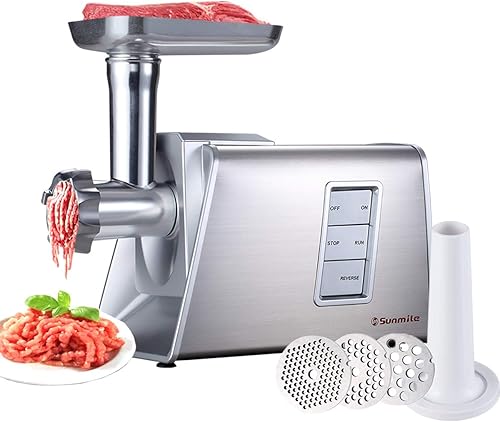
This is where most home grinding happens. The Sunmile SM-G35, rated at 800W and priced at $46.99, has earned over 2,900 reviews and handles everyday burger and sausage grinding without drama. At 1000W, the Sunmile SM-G73 ($79.99, 4.4 stars across 796 reviews) adds a bit more headroom for fattier cuts or slightly longer sessions. Grinders in this band can process lean venison and pork shoulder in reasonable batches as long as you keep the meat cold and cut it into manageable chunks. The motor may still warm up after 10 to 15 minutes of non-stop work, so short breaks between batches extend its life.
The 1000W to 1500W Range: Serious Home or Semi-Pro Use
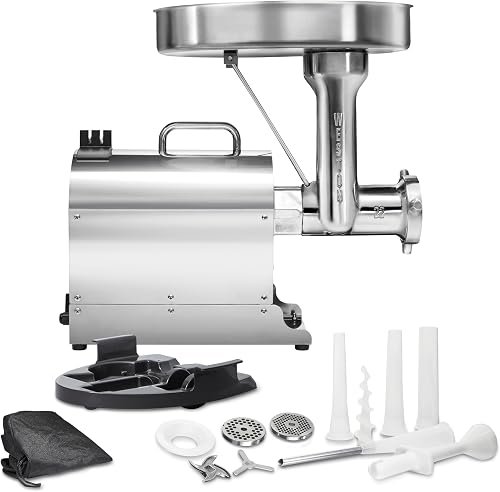
Once you are grinding 10 or more pounds per session, processing whole roasts, or regularly working with game like elk or moose, wattage in the 1000W to 1500W band makes the difference between a smooth session and a frustrating one. The Weston 10-2201-W runs at 1125W, weighs 58 pounds, and carries a 4.6-star rating from 166 buyers at $958.45. A machine at this level is built with heavier internal components and can sustain longer duty cycles without thermal cutoff. You pay more upfront, but the motor is not working near its limit on every batch, which extends the lifespan significantly.
1500W and Above: When Is It Overkill?
Some consumer models advertise 2600W or 3000W peak ratings, but those figures often reflect momentary peak draw rather than sustained operating wattage. A motor that claims 3000W but is housed in a 5-pound body with a plastic auger is unlikely to deliver that power continuously. True 1500W-plus performance shows up in machines that weigh considerably more, use all-metal grinding heads, and are designed for butcher-shop or farm-processing use. If you process a whole deer or multiple hogs per season, a genuine 1500W or higher unit is worth the investment. For typical household grinding, the extra watts add cost without adding practical benefit.
Other Factors That Work Alongside Wattage
Wattage alone does not determine grinding quality. The size of the grinding plate holes affects texture, with coarser plates requiring more force regardless of wattage. Meat temperature is critical: partially frozen meat (around 30 to 34 degrees Fahrenheit) feeds through more cleanly and puts less stress on any motor. Plate and knife sharpness matter too, because a dull cutting surface makes the motor work harder even at high wattage. Look for a model with included fine and coarse plates so you can match the grind to the recipe. Build quality of the auger, head, and housing ultimately determines how long any wattage rating translates into real-world performance.
Common mistakes to avoid
- Choosing wattage based on advertised peak power instead of sustained operating wattage, which is the number that matters under load.
- Grinding meat at refrigerator temperature (38 to 40 degrees Fahrenheit) instead of partially frozen, making the motor work harder than necessary.
- Feeding large chunks directly into the throat instead of cutting meat into 1-inch cubes, which strains even high-watt motors.
- Running the motor continuously for long periods without breaks, causing thermal cutoff on motors that lack adequate cooling.
- Buying a light-duty 300W to 400W unit expecting it to handle venison or pork shoulder in volume, then blaming the machine when it bogs down.
- Ignoring plate and knife sharpness, which forces the motor to compensate with extra torque even when wattage is adequate.
Frequently asked questions
Is 500 watts enough for grinding beef at home?
For small batches of trimmed, boneless beef, 500 watts can work if you grind slowly and keep the meat cold. The motor will strain on fattier cuts or larger loads, so you need to pause frequently. Most people who grind beef regularly find 700 to 800 watts more comfortable and less likely to cause overheating.
Do higher-watt grinders produce better texture?
Not directly. Texture depends mainly on plate hole size and how cold the meat is when it goes through. Higher wattage helps because the motor does not slow down under load, which keeps the grind consistent. A 1000W motor pushing through tough venison produces a cleaner cut than an 800W motor that bogs and smears the meat.
What wattage do I need for grinding venison?
Venison is lean and fibrous, which means it requires more cutting force than well-marbled beef. A minimum of 800 watts is recommended, and 1000 to 1200 watts is more practical if you are processing a whole deer at once. Keeping the meat close to freezing reduces resistance and helps any motor handle the job more cleanly.
Are 2600W or 3000W consumer grinders actually that powerful?
Usually not in sustained use. Those ratings often reflect the instantaneous peak draw the motor can reach, not the wattage it maintains during a full grinding session. A more meaningful number is the continuous or rated wattage listed in the full specifications. Heavy-bodied machines with all-metal grinding components are more likely to back up a high wattage claim than compact lightweight models.
How do I know if my current grinder is underpowered?
Signs include the motor slowing noticeably when meat enters the auger, the housing getting hot to the touch after a few minutes, or the thermal cutoff tripping and stopping the machine mid-batch. If you experience any of these regularly, the motor is working at or above its comfortable limit. Moving up by 200 to 400 watts typically resolves the issue.