What Do Dishwasher Decibels Mean?
Recommended picks

How the Decibel Scale Works
Decibels use a logarithmic scale, not a linear one. Every 10 dB increase represents roughly a doubling in perceived loudness, so a 52 dB dishwasher does not sound just slightly louder than a 42 dB model, it sounds noticeably louder. Normal conversation sits around 60 dB, a library around 40 dB. That context helps you place dishwasher ratings on a real-world scale. Most built-in dishwashers sold today fall between 42 dB and 55 dB, so the spread across the category is meaningful.
What Each Decibel Range Feels Like at Home
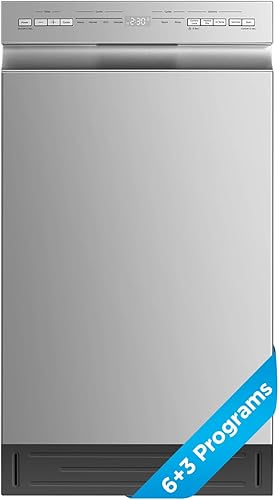
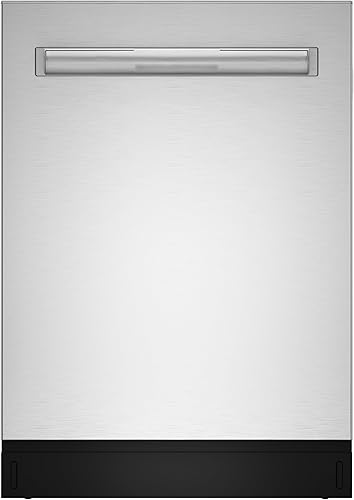
A dishwasher rated at 38 to 44 dB is very hard to hear from an adjacent room and nearly silent if the kitchen door is closed. The Honeywell HDS24SS-H rates at 42 dB and carries 327 reviews at a 3.8-star average, priced at $399.99, which shows you can reach that quiet tier without a luxury price tag. The 45 to 50 dB range is audible but easy to ignore during TV or conversation. Above 51 dB, most people describe the noise as a constant hum that cuts through background sounds. The Midea MDF18A1AST runs at 52 dB and has 501 reviews at 4.2 stars for $499.12, a well-reviewed machine where the noise is the main trade-off buyers cite. The Whirlpool WDP540HAMW sits at 55 dB, the upper end of the typical range, which is clearly audible in an open kitchen.
Why Quieter Dishwashers Cost More
Reducing dishwasher noise requires real engineering investment. Manufacturers add thick insulation blankets around the tub, use heavier stainless steel tubs that dampen vibration, and design wash arms and pump motors to run at lower speeds. All of that adds material cost and weight. The ZLINE DWMTZ-WM-24-MB, for example, hits 44 dB and weighs 103 lb with touch controls at $1,359.99, while a basic 55 dB machine may weigh under 70 lb and cost half as much. Neither price point is wrong, but the noise reduction is what you are paying for in the premium tier.
Open-Plan Kitchens vs. Closed Kitchens
The layout of your home matters as much as the dB rating itself. A 50 dB dishwasher in a closed kitchen behind a solid door can be perfectly livable. The same machine in a studio apartment or a great room that opens directly to the living area will be distracting during evening use. If your kitchen shares airspace with a home office, a nursery, or a media room, budgeting for a 44 dB or lower model is worth the cost. If the machine is behind a door and runs overnight, you may find a 50 to 52 dB option works fine.
Other Factors That Affect Perceived Noise
The dB rating is measured under controlled conditions, so real-world noise can vary. Hard flooring amplifies vibration more than carpet. A dishwasher that is not level will rattle the cabinet frame and produce extra noise regardless of its rating. Loose dish racks and lightweight plastic items that shift during the cycle also add clanking sounds that the spec sheet does not capture. Anti-vibration feet, a properly installed toe kick, and a fully loaded rack all help keep actual noise close to the rated figure.
How to Compare Decibel Ratings When Shopping
Not every brand measures noise the same way, but most reputable manufacturers use the IEC 60704-2-3 standard, taken at a one-meter distance. When comparing two models, a difference of one or two dB is not reliably perceptible. A gap of five dB or more is clearly noticeable to most people. If two machines are within three dB of each other, weight the comparison toward other factors like capacity, controls, and owner ratings. Focus on dB as a decision point mainly when you are choosing between the under-45 and over-50 tiers, where the difference is real and consistent.
Common mistakes to avoid
- Treating a one or two dB difference between models as meaningful when it is within normal measurement variation.
- Assuming the dB rating covers all cycle stages. The spec is usually measured during the main wash, and some machines are louder during drain.
- Ignoring installation quality. A dishwasher that is not level or lacks a snug toe kick will rattle regardless of its rated noise level.
- Buying a 44 dB machine and running it during the day in a closed kitchen, where a 50 dB model would have worked just as well at a lower price.
- Comparing dB ratings across countertop and built-in dishwashers as if they are the same. Countertop units are measured differently and have less insulation by design.
- Overlooking that heavy stainless steel tubs reduce noise, so checking the tub material is a quick proxy for build quality if the dB spec is missing.
Frequently asked questions
Is 50 dB loud for a dishwasher?
50 dB is noticeable in a quiet room but not disruptive during most household activities. It falls in the middle of the typical range for built-in dishwashers. If your kitchen is open to a living area or you are sensitive to background noise, look for a model rated 44 dB or lower.
What is considered a quiet dishwasher?
Most appliance experts and manufacturers use 44 dB or below as the threshold for a quiet dishwasher. At that level, the machine is barely audible from the next room and generally inaudible when a TV or music is playing. Models below 42 dB are marketed as ultra-quiet and typically carry a premium price.
Does a lower dB rating mean the dishwasher cleans better?
No. The decibel rating reflects sound insulation and motor engineering, not cleaning performance. Some very quiet machines use gentler pump speeds that can actually affect wash intensity on heavily soiled loads. Always check cleaning cycle options and owner reviews alongside the dB spec.
Why does my dishwasher sound louder than its rated dB?
Several installation and usage factors can raise real-world noise above the spec. An unlevel machine vibrates against the cabinet frame, loose dish racks rattle, and hard flooring reflects sound more than carpet does. Check that the unit is level, the feet are secure, and the rack tines are not loose before assuming the machine is defective.
How much more do quiet dishwashers cost?
The price jump from the 50 to 52 dB tier to the 42 to 44 dB tier can range from a couple hundred dollars to over a thousand, depending on the brand. Some budget-friendly options like the Honeywell HDS24SS-H reach 42 dB at $399.99, which shows that quiet machines are available without always spending at the premium level.